Neuropharmacology & Neurotherapeutics
Suzetrigine
May. 14, 2026
MedLink, LLC
3525 Del Mar Heights Rd, Ste 304
San Diego, CA 92130-2122
Toll Free (U.S. + Canada): 800-452-2400
US Number: +1-619-640-4660
Support: service@medlink.com
Editor: editor@medlink.com
ISSN: 2831-9125
Toll Free (U.S. + Canada): 800-452-2400
US Number: +1-619-640-4660
Support: service@medlink.com
Editor: editor@medlink.com
ISSN: 2831-9125
Worddefinition
At vero eos et accusamus et iusto odio dignissimos ducimus qui blanditiis praesentium voluptatum deleniti atque corrupti quos dolores et quas.
Refractory migraine describes a severe treatment-response phenotype in which a patient with migraine continues to have substantial disease burden despite failure of all available categories of evidence-based preventive therapy. Although refractory migraine is not yet recognized in the International Classification of Headache Disorders, 3rd edition, interest in the construct has increased because targeted therapies have expanded the preventive armamentarium while also making it clearer that a small but highly disabled subgroup remains inadequately controlled. Recent work has refined the related categories of resistant migraine, probable refractory migraine, and treatment-responsive migraine, providing a more useful framework for clinical care, research, and future biomarker studies.
|
• Refractory migraine is not currently an ICHD-3 diagnosis, but recent international consensus criteria provide a practical research and clinical framework. | |
|
• Resistant migraine requires failure of at least three evidence-based preventive classes. Refractory migraine requires failure of all currently available evidence-based classes. | |
|
• Probable refractory migraine accounts for patients in whom access barriers, contraindications, or intolerance prevent completion of all class trials. | |
|
• Refractory migraine should be treated as a dynamic treatment-response state rather than a declaration that no future improvement is possible. |
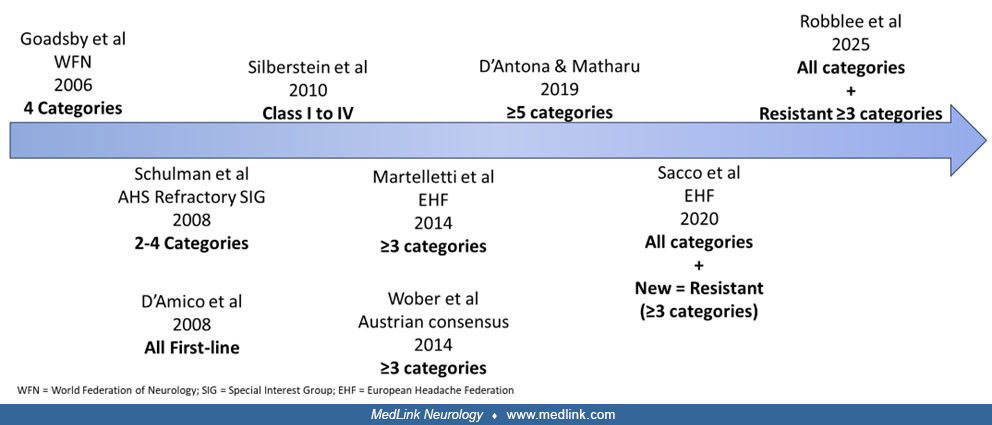
Definitions of refractory migraine have evolved substantially over the past two decades. These iterations reflect changes in available preventive therapies, ongoing debates over the optimal threshold to describe true refractoriness, and new diagnostic categories like resistant migraine.
The concept of refractory was first formalized in 2006 at a World Federation of Neurology meeting using the terminology “intractable headache,” with descriptions for both migraine and cluster headache (23). It was defined as the failure of at least four categories of preventive treatments. Treatment failure could include lack of response, adverse effects, or contraindications. For patients with migraine, at least three of the failed categories were to include beta blockers, antiseizure medications, calcium channel blockers, or tricyclics. Other categories noted were nonsteroidal anti-inflammatory drugs (NSAIDs), metabolic enhancers (such as riboflavin or coenzyme Q10), and treatments supported by at least one positive randomized controlled trial.
In 2008, the American Headache Society (AHS) Refractory Headache Special Interest Group (SIG) published a new definition requiring two to four previous treatment failures from the following categories: beta blockers, antiseizure medications, tricyclics, and calcium channel blockers (75). Treatment failure required either an ineffective trial at optimal dosing for at least 2 months or early cessation due to intolerable side effects. Diagnosis also required inadequate trials of acute medications, including both a triptan and dihydroergotamine, as well as either an NSAID or a combination analgesic. The term “refractory” was applied to both episodic migraine and chronic migraine. The group also included modifiers for medication overuse and disability.
In the same year, a separate group more broadly defined refractory migraine as the lack of response to all first-line treatments (16). This group also advocated for intractability definitions for each type of primary headache, further divided into preventive, acute, nonpharmacologic, and, where applicable, surgical categories.
In 2010, a new definition using the term “intractable” was published that took a different approach. The authors recommended separate stratified definitions for preventive and acute treatment failure that could then guide treatment pathways (81). Intractable headache based on acute treatment was divided into class I (mild), class II (moderate), and class III (severe), with progressive classes built on the requirements of the previous class. For instance, class I required failure of two different classes of nonspecific acute treatments, whereas class II additionally required failure of a triptan or dihydroergotamine. Class III then added failure of treatment trials involving opioids, steroids, or parenteral dopamine antagonists. Intractable headache based on preventive treatment had four classes, with class IV being very severe. These classes progressed from one drug (class I) to two drugs (class II) to three drugs (class III) to additional failure of aggressive outpatient or inpatient infusions or medication overuse detoxification (class IV). The included preventive medications were stratified into those with better evidence (beta blockers, tricyclics, valproate, verapamil or flunarizine, topiramate, or combination therapy) and those with less evidence (NSAIDs, metabolic enhancers, gabapentin, or a treatment with at least one positive placebo-controlled trial). Based on the assigned class for acute and preventive treatments, as well as disability level, recommendations were provided regarding when to refer to a specialist, a headache specialist, or for hospitalization.
The European Headache Federation published a definition for refractory migraine in 2014, and an Austrian consensus commentary published the same year reached a similar threshold; both required at least three prior preventive treatment failures (44; Wober et al 2014). In 2019 a new definition recommended increasing the threshold to at least five prior preventive treatment categories (18). These evolving definitions also shaped how difficult-to-treat populations were defined in clinical trials, which commonly enrolled patients with two to four prior preventive treatment failures (20; 48; 06; 21).
In 2020, the European Headache Federation published an updated definition following a Delphi consensus (69). This framework defined refractory migraine as failure of all treatment categories and introduced a new category, resistant migraine, defined by failure of at least three preventive categories. The treatment categories were antidepressants, antiseizure medications, beta blockers, calcium channel blockers, calcitonin gene-related peptide (CGRP) pathway medications, angiotensin pathway blockers, onabotulinumtoxinA, and a category for newly developed medications.
Building on the 2020 definition, an international working group conducted another Delphi consensus that agreed with the threshold put forward by the European Headache Federation, but with nuanced updates to the definition, including the addition of NMDA receptor antagonists as a treatment category and requiring two of the following: disability, eight or more monthly migraine days, or continuous background headache (59). This group also proposed definitions for probable refractory migraine and treatment-responsive migraine. There is no requirement for acute medication failures. Despite this evolving literature, neither refractory migraine nor resistant migraine is currently recognized as a formal diagnosis in the ICHD-3.
|
• Refractory migraine is a clinical course defined by persistent high disease burden despite failure of all evidence-based preventive treatment categories rather than by a unique symptom phenotype. | |
|
• Patients typically present with high-frequency or near-daily headache; superimposed migraine attacks; marked disability; and common psychiatric-, sleep-, pain-, and medication-related comorbidities. | |
|
• Resistant migraine is a related but less extreme state. Some patients subsequently become treatment-responsive, whereas a smaller subset progresses to refractory migraine. |
Refractory migraine represents a subgroup of patients with migraine who remain highly disabled despite exhaustive trials of evidence-based preventive therapies. The contemporary international consensus framework distinguishes resistant migraine from refractory migraine, with resistant migraine referring to severe migraine with failure of at least three preventive treatment categories and refractory migraine referring to failure of all available evidence-based preventive treatment categories (59).
The consensus criteria for refractory and resistant migraine were developed in part to better capture this severe end of the migraine spectrum. Both require an established diagnosis of migraine and evidence of substantial disease burden, including at least two of the following: considerable functional impairment, continuous or near-continuous headache between attacks, or at least eight monthly migraine days. The distinction lies primarily in the extent of preventive treatment failure: resistant migraine requires failure of at least three evidence-based preventive categories, whereas refractory migraine requires failure of all categories, with most failures due to true lack of efficacy rather than intolerance or contraindication (59). Detailed medication categories and adequate trial specifications are described under Diagnostic criteria.
The longitudinal course is heterogeneous. Resistant migraine appears to be a dynamic state rather than an irreversible endpoint. Some patients improve over time and become treatment-responsive, whereas others continue to accrue treatment failures and evolve to refractory migraine. In the REFINE study, 40.4% of patients with resistant migraine reverted to treatment-responsive migraine over 6 months, whereas 4.5% progressed to refractory migraine during that interval (53). By contrast, patients meeting criteria for refractory migraine generally represent the most severe end of the treatment-resistant spectrum and often have persistent long-term disability.
Overall, the prognosis for refractory migraine is poorer than in most patients with migraine, with higher headache-related disability, greater psychiatric symptom burden, and more frequent medical and pain-related comorbidities. In the REFINE cohort, patients with resistant and especially refractory migraine had greater baseline burden than those with non-resistant/non-refractory migraine, including higher rates of chronic migraine and medication overuse, higher HIT-6 and HALT scores, and more anxiety and depressive symptoms (53). Multiple comorbidities were also more common in refractory migraine than in resistant or non-resistant/non-refractory migraine.
At the same time, prognosis is not uniformly fixed. In the 6-month longitudinal REFINE study of 489 patients treated at tertiary headache centers, 78.1% of patients with non-resistant/non-refractory migraine remained stable, whereas 21.9% progressed to resistant migraine (53). Among those with resistant migraine, 55.1% remained resistant, 40.4% to 40.5% improved to non-resistant/non-refractory migraine, and 4.5% progressed to refractory migraine. Among those with refractory migraine, 67.3% remained refractory and 32.7% improved to non-resistant/non-refractory migraine. These data suggest that resistant and even refractory migraine can improve over time, although refractory migraine remains the most stable and burdensome category.
Complications are largely those of sustained severe migraine burden rather than a unique complication profile. Common adverse consequences include persistent functional impairment, daily symptoms, medication overuse, psychiatric comorbidity, polypharmacy, and high rates of comorbidities. In REFINE, psychiatric comorbidities, trigger points, temporomandibular joint disorders, thyroiditis, and cerebrovascular diseases were more common in refractory migraine (65).
Before the emergence of CGRP-targeted therapies, many previously treatment-refractory patients would have been diagnosed as refractory migraine. As newer preventive targets become available, some patients currently categorized as refractory migraine may later prove to have treatment-resistant rather than permanently treatment-unresponsive disease; however, this remains an inference.
|
• No validated biomarker currently identifies refractory migraine. | |
|
• Refractory migraine is best understood as a severe, multifactorial treatment-response phenotype rather than a single proven biological entity. | |
|
• Likely contributors include central sensitization, altered pain-modulatory network function, migraine chronification mechanisms, comorbidity burden, and treatment-limiting adverse-effect susceptibility. |
The biological basis of refractory migraine remains incompletely defined. Current evidence supports viewing refractory migraine as the end result of several interacting processes rather than a single mechanism (58). First, migraine itself arises in a genetically influenced brain that is vulnerable to disordered sensory processing and activation of trigeminovascular pathways (26; 50). Second, progression toward chronic and highly disabling disease appears to be strongly shaped by acquired factors, such as high attack frequency, medication overuse, sleep disturbances, obesity, psychiatric comorbidity, and stressful life events (07). Third, once headache becomes frequent or continuous, central sensitization and impaired descending pain modulation may reduce the probability of response to both acute and preventive therapies (50).
In this model, refractory migraine is not simply “more migraine.” It likely reflects an interaction between migraine biology, chronification, cumulative disease burden, and heterogeneity in treatment response or tolerability (50). Allodynia, interictal burden, and high comorbidity burden are consistent with a sensitized, high-burden migraine phenotype, but they are not specific markers of refractoriness as they are also seen in chronic and resistant migraine (29; 45; 55; 65). Similarly, available neuroimaging suggests that poor treatment response has early, widespread reduction in apparent diffusion coefficient across multiple pain-processing regions, suggesting that microstructural connectivity abnormalities preceded therapeutic failure (72). However, no pattern is currently specific enough to serve as a diagnostic biomarker for refractory migraine.
A practical way to present the current state of knowledge is that refractory migraine probably represents a final common clinical phenotype reached through multiple pathways: biologic vulnerability, migraine chronification, behavioral and environmental amplifiers, alternative diagnoses not yet identified, and, in some patients, an unusual propensity either not to respond to otherwise effective therapies or not to tolerate them. This uncertainty should be made explicit because overstatement would imply a mechanistic precision that the field does not yet have.
Genetics. No refractory migraine-specific genetic signature has been established. The available literature more strongly supports migraine as a polygenic disorder with chronification and severe disease expression shaped by environmental and clinical modifiers (26). For that reason, heredity should be described as complex and non-Mendelian, similar to migraine more broadly, rather than as a distinct inherited form of refractory migraine.
Pathophysiology. Pathophysiologic mechanisms proposed in resistant and refractory migraine include persistent trigeminovascular activation, central sensitization, altered sensory gain, impaired descending antinociceptive control, neuropeptide-related mechanisms, such as CGRP signaling, and maladaptive network changes (50). None of these mechanisms have been shown to uniquely define refractory migraine, but together they offer a biologically plausible explanation for why some patients evolve toward continuous headache, persistent disability, and low responsiveness across multiple preventive classes.
|
• Population-based incidence and prevalence estimates for resistant and refractory migraine are not yet well defined, largely because formal definitions are recent and have varied over time. | |
|
• Both conditions are encountered disproportionately in headache specialty practice, where resistant migraine is more common than refractory migraine. | |
|
• Pediatric epidemiology remains especially sparse. |
Population-based incidence and prevalence estimates for resistant and refractory migraine are not yet well defined. This reflects both the recency of modern consensus definitions and the historical variability in how refractoriness has been defined across studies. Available evidence, therefore, comes largely from specialty-clinic cohorts and physician surveys rather than population-based epidemiological studies (58; 50).
Practice-pattern data suggest that resistant and refractory migraine are disproportionately encountered in headache-focused settings. In an international survey of 277 physicians, 49.5% reported that they frequently managed patients with resistant migraine, and 28.9% frequently managed patients with refractory migraine (70). These proportions were substantially higher in headache specialist centers, where 75% of physicians reported frequently seeing resistant migraine and 46% reported frequently seeing refractory migraine. These data are useful for understanding care concentration, but they should not be interpreted as prevalence estimates.
Clinic-based studies similarly suggest that refractory migraine represents an important minority of patients seen in tertiary care. In a 2011 study of 370 consecutive patients evaluated in a tertiary headache unit, 5.1% met a modified version of the American Headache Society refractory migraine criteria. Those patients were highly disabled, with a mean MIDAS score of 96, and 36.8% had medication overuse (30). The prospective REFINE study applied contemporary resistant and refractory migraine definitions to 489 patients treated in tertiary headache centers (53). In that cohort, 11.2% had refractory migraine, 36.4% had resistant migraine, and 52.4% had neither, again supporting the view that resistant migraine is more common than refractory migraine in specialty practice.
Pediatric epidemiology is even less well characterized, and older pediatric studies often used definitions that map imperfectly onto current adult consensus criteria. In one retrospective pediatric neurology clinic study, 24% of 210 patients with migraine were considered refractory after three prior treatment failures, a threshold that more closely resembles the current concept of resistant migraine than refractory migraine (34). More recent pediatric data have focused less on prevalence than on phenotype; for example, among pediatric patients with refractory chronic migraine referred for infusion treatment, headache frequency and disability were higher than in non-refractory chronic migraine and episodic migraine, although adverse childhood experience scores did not differ significantly between refractory and non-refractory chronic migraine groups (01).
Although precise prevalence remains uncertain, available evidence suggests that resistant and refractory migraine carry a disproportionate healthcare burden. In a Taiwanese claims-based matched case-control study using ICD-9 code 346.11 as a proxy for refractory migraine, affected patients had significantly higher total medical and drug costs than both non-migraine controls and patients with other migraine diagnoses (86). Together, these data suggest that resistant and refractory migraine are uncommon but clinically concentrated, high-burden states that are encountered most often in tertiary headache practice.
|
• There are no direct studies showing how to prevent progression to refractory migraine. | |
|
• The most defensible preventive approach is early identification and modification of risk factors associated with migraine progression and chronification. | |
|
• Prevention is best framed as risk reduction rather than guaranteed avoidance because some patients progress despite appropriate care and others later improve. |
Direct evidence on prevention of refractory migraine is lacking. Preventive recommendations, therefore, must be inferred from the literature on migraine progression and chronic migraine rather than from studies specifically designed to prevent a refractory course. Current evidence supports identifying patients at risk for progression and addressing modifiable contributors early (09), but intervention studies proving that such measures prevent refractory migraine are not available.
Risk factors associated with progression to chronic migraine include increasing headache frequency, poorly optimized acute treatment, acute medication overuse, selected psychiatric symptoms, extra-cephalic chronic pain conditions, metabolism-related comorbidities, including obesity, sleep disturbance, physical inactivity, tobacco use, financial constraints, and stressful or other exogenous triggers (37; 36; 09). These data support an early, comprehensive approach to care: optimize acute treatment so attacks are treated effectively, reduce medication overuse when possible, address comorbidities, encourage exercise and weight optimization when appropriate, include behavioral management, and treat coexisting pain generators.
Acute-treatment strategy likely matters. Reviews of longitudinal data suggest that poorly optimized acute treatment and medication overuse are linked to migraine progression (07). Opioid- and barbiturate-containing products are of particular concern. NSAIDs may be protective in people with lower baseline headache frequency, but this effect is not consistently seen across higher-frequency states and should not be overinterpreted as a proven prevention strategy for refractory migraine.
Preventive therapy can reduce headache frequency and, in many patients, convert chronic migraine to episodic migraine, but this is not the same as proving prevention of refractory migraine. In the INTREPID trial, topiramate reduced headache and migraine days in patients with high-frequency episodic migraine but did not significantly prevent new-onset chronic daily headache at 6 months (38). Thus, early optimization of preventive treatment is reasonable and likely beneficial, but claiming that it prevents a future refractory course would still be speculative.
Lifestyle measures should be incorporated as part of overall risk reduction, although none has been specifically shown to prevent refractory migraine. The best-supported targets are regular sleep, treatment of sleep disorders, physical activity, weight optimization when relevant, limitation of excessive caffeine, smoking cessation, and reduction of medication overuse (36). Diet and nutritional supplements may have a role in general migraine prevention, but there is no evidence that they specifically prevent chronification into refractory migraine.
Prevention of chronification is not synonymous with prevention of refractory migraine. Some patients will still progress despite appropriate care, whereas others initially classified as resistant or refractory later improve with additional therapies or improved access (36; 53). For that reason, prevention is best framed as risk reduction rather than guaranteed avoidance.
|
• Refractory migraine should only be diagnosed after repeated reconsideration of mimics and important contributors. |
New daily persistent headache. New daily persistent headache can closely resemble refractory migraine because it may have a migraine phenotype and a highly treatment-resistant course. The key distinguishing feature is a distinct and clearly remembered onset, with headache becoming continuous and unremitting within 24 hours (27). A prior history of migraine is allowed, but there should not be a gradual escalation of migraine frequency culminating in daily headache, which instead favors progression of migraine rather than new daily persistent headache.
CSF pressure disorders. CSF pressure disorders are among the most important secondary mimics of refractory migraine. Idiopathic intracranial hypertension should be considered, particularly in patients with obesity, pulsatile tinnitus, visual symptoms, or symptoms suggestive of raised intracranial pressure. A careful funduscopic examination is essential, but the absence of papilledema does not completely exclude idiopathic intracranial hypertension (11). Spontaneous intracranial hypotension classically causes orthostatic headache that improves when supine, but the phenotype can be broader and less positional than traditionally taught (17). Brain MRI is abnormal in many patients with spontaneous intracranial hypotension, but a normal or minimally abnormal MRI does not exclude the diagnosis.
Hemicrania continua. Hemicrania continua should be considered in a patient with a strictly unilateral and continuous headache, especially when associated with strictly ipsilateral cranial autonomic symptoms or restlessness (27). An indomethacin trial is often decisive because a complete response to indomethacin is a defining feature of the disorder in the ICHD-3.
Chronic cluster headache. Cluster headache should be considered in a patient with strictly unilateral headache with attacks lasting 15 minutes to 3 hours and associated ipsilateral cranial autonomic symptoms or restlessness (27). In chronic cluster headache there are no breaks in cluster cycles lasting 3 or more months. Complicating this diagnosis, interictal pain can be present and appears to be more common in chronic cluster headache compared to episodic cluster headache (40). Unfortunately, treatment options are also limited for this diagnosis (93).
Medication overuse headache. Medication overuse can coexist with refractory migraine (59), but medication overuse headache remains an important competing or contributing diagnosis. The ICHD-3 characterizes medication overuse headache as an interaction between excessive use of acute medication and a susceptible patient (27). The MOTS trial showed that starting or optimizing preventive therapy without immediate withdrawal of the overused medication was noninferior to a strategy requiring medication switching and limitation (76), so abrupt withdrawal is not always required. Even so, in a patient with persistent nonresponse and ongoing overuse, it remains reasonable to reconsider whether the overused medication itself is perpetuating headache burden.
Cervicogenic and temporomandibular disorders. Cervicogenic headache and temporomandibular disorders are more often important contributors or comorbid mimics than true explanations for all symptoms, but they should be actively sought in patients with refractory headache. Features favoring a cervical source include pain beginning in the neck, provocation by neck movement or sustained awkward posture, and reduced cervical range of motion (27). Painful temporomandibular disorders should be considered when headache is associated with jaw pain, chewing provocation, limited jaw opening, joint sounds, or masticatory muscle tenderness (27). These disorders commonly overlap with migraine and can amplify disability, even when migraine remains the primary diagnosis.
Other secondary headache disorders. The label refractory migraine should trigger renewed scrutiny for secondary headache disorders, especially when the phenotype changes, focal neurologic symptoms emerge, constitutional symptoms are present, or treatment response becomes unexpectedly poor. Refractoriness alone should not be used to justify repeated low-yield testing, but it should lower the threshold for a careful re-evaluation when red flags or atypical features are present.
Migraine. A diagnosis of refractory migraine requires an underlying diagnosis of migraine, whether episodic or chronic and with or without aura (27). Although current definitions technically allow episodic migraine, the required level of burden means that patients usually have either chronic migraine or high-frequency episodic migraine (59).
Resistant migraine. Resistant migraine is the nearest adjacent diagnostic state and should usually be considered before refractory migraine. Current consensus definitions distinguish resistant migraine from refractory migraine by the extent of preventive treatment failure: resistant migraine requires failure of at least three evidence-based preventive classes, whereas refractory migraine requires failure of all evidence-based classes (69; 59). Clinically, this distinction matters because resistant migraine implies remaining therapeutic opportunities, whereas refractory migraine represents the most treatment-unresponsive end of the spectrum.
Probable refractory migraine. Probable refractory migraine is useful when the clinical picture strongly suggests refractoriness, but the patient has not been able to complete trials of all evidence-based classes, most often because of intolerance, contraindications, age-related limitations, geographic availability, or insurance barriers (59). This category helps prevent overcalling true refractoriness while acknowledging that real-world access limitations often constrain treatment sequencing.
Comorbidities. Medication overuse, psychiatric comorbidity, obesity, temporomandibular disorders, trigger points, and other pain or medical comorbidities are not alternative diagnoses in themselves, but they are common in difficult-to-treat migraine and can make apparent refractoriness worse. In the REFINE study, both resistant and refractory migraine carried a greater comorbidity burden than non-resistant/non-refractory migraine, with the highest burden seen in refractory migraine (65). These factors should therefore be considered amplifiers and management targets rather than defining features, by themselves, of refractory migraine.
|
• Refractory migraine requires two of the following: considerable functional disability, constant background headache, and at least eight monthly migraine days. | |
|
• Refractory migraine requires failure of all categories of preventive treatments. | |
|
• There is no universally accepted diagnostic workup specific to refractory migraine. | |
|
• The workup should prioritize review of prior treatment trials, reconfirmation of diagnosis, and consideration of comorbidity contributions. |
Current consensus diagnostic framework. Refractory migraine represents a subpopulation of patients with migraine who do not respond to any category of evidence-based preventive treatments.
|
A. Established diagnosis of 1.1 migraine without aura and/or 1.2 migraine with aura and/or 1.3 chronic migraine | |
|
B. Headache requiring two of the following: | |
|
1. Leads to considerable impairment in personal, educational, and/or occupational areas of functioning | |
|
2. Concomitant continuous or near continuous headache between migraine attacks | |
|
3. ≥8 monthly migraine days | |
|
C. Lack of ≥50% reduction in monthly migraine days and/or intolerable side effects and/or absolute contraindication to at least one evidence-based medication from each of the below classes, of which more than four must be due to a true lack of response: | |
|
1. CGRP pathway inhibitor | |
|
2. OnabotulinumtoxinA | |
|
3. Antidepressant | |
|
4. Beta blocker | |
|
5. Angiotensin pathway blocker | |
|
6. Calcium channel blocker | |
|
7. Anti-seizure medication | |
|
8. NMDA receptor antagonist | |
|
9. Newly approved evidence-based medication not currently listed | |
|
D. Not better accounted for by another ICHD-3 diagnosis | |
|
(59) | |
|
A. Established diagnosis of 1.1 migraine without aura and/or 1.2 migraine with aura and/or 1.3 chronic migraine | |
|
B. Headache requiring two of the following: | |
|
1. Leads to considerable impairment in personal, educational, and/or occupational areas of functioning | |
|
2. Concomitant continuous or near continuous headache between migraine attacks | |
|
3. ≥8 monthly migraine days | |
|
C. Lack of ≥50% reduction in monthly migraine days and/or intolerable side effects and/or absolute contraindication to 3 or more, but not all classes, of at least one evidence-based medication from each of the below classes: | |
|
1. CGRP pathway inhibitor | |
|
2. OnabotulinumtoxinA | |
|
3. Antidepressant | |
|
4. Beta blocker | |
|
5. Angiotensin pathway blocker | |
|
6. Calcium channel blocker | |
|
7. Antiseizure medication | |
|
8. NMDA receptor antagonist | |
|
9. Newly approved evidence-based medication not currently listed | |
|
D. Not better accounted for by another ICHD-3 diagnosis. | |
|
(59) | |
Establishing the diagnosis. Refractory migraine should not be diagnosed solely by counting prior medication failures. The diagnosis rests on three parallel tasks: confirming that the underlying headache disorder is migraine, establishing that prior preventive trials were genuinely adequate, and excluding alternative or coexisting conditions that materially explain the poor outcome. The most common practical error is to label a patient as refractory before the phenotype, treatment history, or differential diagnosis has been adequately revisited.
History should document headache onset pattern, chronology of escalation, presence or absence of a distinctly remembered day of daily headache onset, aura status, interictal baseline pain, autonomic features, positional features, cough or Valsalva sensitivity, sleep-related worsening, menstrual pattern, comorbid pain conditions, psychiatric history, and prior procedures or surgeries. Acute and preventive treatment history should be reviewed in detail, including dose, duration, adherence, adverse effects, insurance denials, and whether discontinuation reflected true lack of efficacy versus intolerance or lack of access.
Evaluation for alternative or concurrent diagnoses. Physical examination should include a focused neurologic examination, fundoscopy or formal fundus assessment for papilledema, blood pressure, neck range of movement, palpation for temporomandibular and cervical myofascial pain, jaw opening and tracking, and assessment for features suggesting hemicrania continua or trigeminal autonomic cephalalgias in patients with highly lateralized pain. In a patient with refractory chronic daily headache, papilledema should never be assumed absent without looking for it.
Neuroimaging is not routinely indicated for uncomplicated migraine, but the threshold for imaging is lower in patients being considered for a diagnosis of refractory migraine because alternative or concurrent diagnoses become more consequential in this context. Brain MRI is reasonable in patients with atypical features, substantial change in phenotype, side-locked headache, positional features, persistent focal symptoms, or concern for CSF pressure disorder. Further imaging or lumbar puncture should be directed by the clinical context. In particular, idiopathic intracranial hypertension without papilledema and spontaneous intracranial hypotension should be reconsidered when the story fits rather than dismissed because the presentation is not classic.
Laboratory testing should remain targeted rather than indiscriminate. Screening may be appropriate when suggested by history or medication planning, eg, thyroid studies (27), metabolic studies, or pregnancy testing. Sleep apnea screening is appropriate in patients with snoring, obesity, witnessed apneas, nonrestorative sleep, or prominent morning headache (12; 27). Assessment for medication overuse, depression, anxiety, trauma-related symptoms, and substance use is not ancillary to the workup; these factors can be central determinants of outcome and should be explicitly assessed.
|
• There are no randomized controlled trials specifically dedicated to patients meeting the 2025 refractory migraine definition. | |
|
• Management begins with re-evaluation of diagnosis and prior treatment adequacy, not automatic escalation to more invasive care. | |
|
• Treatment generally requires layered care: optimized acute therapy, rational preventive therapy, behavioral and lifestyle treatment, management of comorbidities, and selected infusion, procedural, device-based, or off-label salvage options. | |
|
• A diagnosis of refractory migraine should guide intensity of management and expectation-setting, but it should not be presented as therapeutic futility. |
The management literature for refractory migraine is limited by major heterogeneity in definitions, study populations, and treatment access. Many older studies labeled patients as refractory or intractable despite prior failures that would now fit resistant migraine, and some would not even meet current resistant migraine criteria. For that reason, management recommendations are necessarily pragmatic and evidence-tiered. The clearest message is that care should be individualized, specialist-led when possible, and explicit about the difference between evidence-supported care, low-level evidence, and purely empirical salvage treatment.
1. Re-evaluate the diagnosis and the drivers of poor control. The first intervention is diagnostic. Before adding more treatments, reconsider whether the dominant problem is truly migraine alone, whether a secondary headache disorder has been missed, and whether coexisting diagnoses are amplifying burden (58; 46). Particular attention should be paid to spontaneous intracranial hypotension, idiopathic intracranial hypertension, including idiopathic intracranial hypertension without papilledema, new daily persistent headache, hemicrania continua, temporomandibular joint disorders, cervicogenic headache, persistent idiopathic facial pain, medication overuse/medication overuse headache, mood disorders, and sleep disorders. Refractory migraine can coexist with these conditions, but failure to identify them will significantly impact management and potential outcomes.
2. Reassess prior preventive and acute treatment trials. A detailed treatment audit often changes the apparent level of refractoriness. Determine whether each prior preventive was actually taken at a therapeutic dose for a sufficient duration, whether adherence was limited by cost or adverse effects, and whether the patient has access to all currently relevant classes from the most recent guidelines (02; 10; 56). The 2025 consensus criteria are useful here because they distinguish true lack of efficacy from intolerance, contraindication, and lack of access (59). In practice, this step may move a patient from apparent refractory migraine to probable refractory migraine or resistant migraine, which is not semantic pedantry; it changes how confidently one should declare that all evidence-based options have truly failed.
3. Optimize acute and bridge treatment. Even in a highly treatment-resistant disease, acute therapy still matters. Poor acute control can worsen disability, reinforce medication overuse, and contribute to continued chronification. Acute treatment should be optimized with attention to timing of use, route of administration, nausea management, and rescue planning. Gepants may be especially attractive in patients at risk for medication overuse. Balancing allowance for medication overuse to allow treatment of all attacks versus being strict about medication overuse headache thresholds is another consideration in this population. For patients with recurrent prolonged attacks, a written bridging strategy may be appropriate, eg, a time-limited steroid strategy, long-acting triptan bridge, or clinic-based rescue procedures like nerve blocks (58). The specific bridge should be individualized to phenotype, prior response, and safety considerations.
4. Consider repeating categories or rational polypharmacy. In refractory migraine, strict serial monotherapy with only one option from each category is unrealistic. Rational polypharmacy is commonly required, especially when partial benefit has been obtained from one therapy, but disability remains high (54). The modern preventive framework should be anchored in current evidence-based classes when possible, including CGRP-pathway therapies, onabotulinumtoxinA, selected antidepressants, beta blockers, angiotensin-pathway blockers, calcium channel blockers, antiseizure medications, and memantine. Even if all categories were ineffective, another medication from each category can be considered at this point, particularly if they have different mechanisms. For instance, try divalproex from the antiseizure medication category even if topiramate was previously ineffective. As another example, there is evidence that supports trying a different CGRP monoclonal antibody in a previous CGRP nonresponder (89). For specifically resistant migraine, both atogepant and eptinezumab have prospective evidence supporting their use as preventive treatment options (03; 31; 66). When a patient has only partially responded to one evidence-based therapy, combining mechanisms from different categories may be more sensible than repeatedly abandoning partially helpful treatments. However, care should also be taken to avoid unnecessary polypharmacy when the benefit is not worth the risk.
Combination modalities can be considered in addition to polypharmacy. Across two small but complementary 2025 trials, noninvasive neuromodulation, via intermittent theta-burst stimulation (iTBS) or combined transcranial direct current stimulation (tDCS), produced meaningful reductions in headache burden (13; 51). The tDCS was specifically evaluated as an adjunct to CGRP monoclonal antibodies. These studies demonstrate a growing shift toward multimodal, circuit‑targeted strategies for at least resistant migraine. Although noninvasive neuromodulation has a lower yield in patients with resistant or refractory migraine, it is also worth considering, though it remains investigational for these populations (61).
Combination approaches should still be purposeful rather than indiscriminate. The clinician should be able to state the rationale for each component, what outcome it targets, and how success or failure will be judged. Careful follow-up to see if there is objective improvement in headache frequency, severity, other symptoms, or general function needs to be assessed with each treatment change. One useful approach is to identify the current most bothersome symptoms or features, such as attack frequency, continuous baseline pain, prolonged attacks, poor acute control, concurrent pain disorders, nausea, sensory sensitivities, muscle spasms, aura, cognition, or energy/sleep disruption. Consider add-on treatment(s) framed around that key concern. Also consider if any current treatments may be causing worsening and would benefit from a dose decrease or discontinuation.
5. Treat comorbidities and amplifiers as part of standard care. Comorbidity management is central to treatment. Depression, anxiety, trauma-related symptoms, obesity, insomnia, obstructive sleep apnea, temporomandibular disorders, chronic neck or back pain, fibromyalgia, dysautonomia, and medication overuse can all worsen migraine burden and limit response. In severe refractory disease, these factors frequently determine whether a patient stabilizes or continues to spiral through treatment failure. Addressing them is not adjunctive care; it is often core care.
6. Nonpharmacologic and behavioral treatment should be routine. Behavioral and lifestyle therapy should be presented as standard treatment, not as a sign that the clinician has run out of medication options. Regular sleep, hydration, exercise, caffeine reduction, meal consistency, and treatment of sleep disorders remain important. Trigger avoidance can be discussed, but caution that many triggers are misattributions, represent the prodrome, and/or are non-modifiable (42). Cognitive-behavioral therapy, mindfulness, biofeedback, and other psychologically informed approaches may be especially valuable in patients with adverse childhood events, high disability, fear-avoidance, catastrophizing, or strong illness-threat beliefs (24; 87; 83; 08; 67; 88). These interventions do not imply a psychogenic headache or prominent psychiatric feature; they address mechanisms that influence pain processing, coping, and treatment response, so they are appropriate for all patients with refractory migraine.
7. Escalate to infusion-based or inpatient treatment when necessary. For some patients, especially those with continuous pain, recurrent status migrainosus, or repeated emergency department use, escalation to structured infusion-based care is appropriate. Depending on the setting, options may include recurrent outpatient infusion protocols or a single/repeated inpatient treatment. The strongest rationale for these approaches is in patients whose disease has become self-sustaining enough that ordinary outpatient changes never gain traction. Published evidence is largely retrospective and heterogeneous (35; 64; 15), but these strategies remain part of real-world specialist care. Options to consider can borrow from parenteral options used in the emergency room for acute migraine management, like dopamine receptor antagonists (62). Options commonly used despite lower evidence include intravenous dihydroergotamine, lidocaine, and ketamine (49; 15; 80; 47; 77; 84; 78; 91; 28; 79).
8. Selected off-label salvage options may be reasonable with informed consent. A small number of off-label treatments have low-level evidence or case-series support in severe treatment-resistant populations. Examples include olanzapine, phenelzine, and mexiletine (71; 82; 39). These options should not be framed as evidence-based standards, but they may be reasonable in carefully selected patients after a transparent discussion of uncertainty, adverse effects, and monitoring needs. This is a setting in which the distinction between evidence-supported and empirically reasonable treatment should be explicit in the chart and in patient counseling.
9. Opioids should remain exceptional. Continuous opioid therapy is not standard migraine care and should remain exceptional. The older headache literature proposed strict selection and monitoring criteria for rare patients with refractory chronic daily headache, and that conservative spirit still holds. If opioids are considered at all, the threshold should be high, alternative diagnoses and medication overuse should be revisited, psychiatric and substance use risk carefully assessed, and monitoring formalized (73; 74).
10. Procedural and surgical care. Peripheral nerve blocks and trigger point injections may be useful adjuncts (33; 43; 25; 22; 85; 62); however, frequency of use and optimal protocols are unknown. By contrast, surgical approaches to migraine remain outside standard neurologic care pathways and should be discussed cautiously because the evidence base is heterogeneous and patient selection is highly variable. If mentioned, surgery is best framed as an area of ongoing investigation rather than a routine option for refractory migraine. There is some evidence for trigeminal/occipital nerve stimulators (57; 63), and new technology is looking at this option for refractory migraine (ClinicalTrials.gov 2026). For those with a concurrent occipital neuralgia phenotype, posterior decompression has been considered (05). Recent work on middle meningeal artery embolization or lidocaine is being investigated (19; 90).
11. Set expectations without conveying hopelessness. Expectation-setting matters. A diagnosis of resistant migraine or refractory migraine should be used to explain why treatment may need to be layered, prolonged, off-label, and/or iterative, not to signal that meaningful improvement is impossible. Longitudinal data show that some patients move between categories over time, including improvement from refractory or resistant states. Cautious optimism is therefore appropriate: the disease is severe and hard to treat but not necessarily permanently fixed (50).
12. Newly emerging treatment targets. New migraine targets are being studied. A patient may be refractory to currently available options but respond to treatment with a new mechanism of action. For instance, PACAP-ligand antibodies may represent a new mechanism for individuals with resistant or refractory migraine, including those nonresponsive to CGRP-directed options (04; 32).
Treatment outcome in refractory migraine should not be judged only by a binary 30% or 50% reduction in monthly migraine days. That threshold remains useful, but in severe disease, it can miss clinically meaningful gains, such as reduced continuous background pain, fewer prolonged attacks, lower acute medication use, fewer emergency visits, improved function, or the ability to return to work or school. At the same time, clinicians should avoid setting inappropriately low expectations simply because the patient carries a refractory label.
A practical outcomes framework is to track several domains: monthly migraine days, headache days, average and peak severity, duration of attacks, acute medication use, disability, quality of life, and patient-defined goals. Current migraine position statements increasingly emphasize aiming for very low disease burden or migraine freedom where possible (68). In refractory migraine, the appropriate short-term goal is often staged improvement across multiple domains rather than immediate normalization, but long-term treatment should still aim higher than marginal benefit alone.
Treatment-related complications depend on the therapies used and may be substantial in this population because patients are frequently exposed to polypharmacy, repeated rescue treatment, procedures, and off-label therapies. Common practical complications include weight gain, sedation, cognitive adverse effects, constipation, orthostasis, medication overuse, and treatment discontinuation due to access barriers. These burdens should be explicitly acknowledged when discussing outcome because tolerability failure is one of the central reasons patients enter probable refractory or refractory pathways in the first place.
Evidence specific to refractory migraine during pregnancy is lacking, so management should follow broader migraine-in-pregnancy principles while recognizing that this subgroup often relies on medications that are difficult to continue during conception planning, pregnancy, or breastfeeding (52). Preconception counseling is especially important. The clinician should review each preventive and rescue medication well before conception attempts, identify therapies that must be discontinued or substituted, and emphasize nonpharmacologic strategies and procedural options when appropriate. For some patients, pregnancy may improve migraine burden, but this should not be assumed, particularly in those with chronic or highly treatment-resistant disease.
The refractory migraine construct is harder to apply in children and adolescents because medication approvals, evidence base, and insurance access differ substantially from adults (41). For that reason, probable refractory migraine may be especially useful in younger patients when the failure to complete all class trials reflects limited access or age-related treatment constraints rather than true exhaustion of all options. Pediatric care should also place major emphasis on nonpharmaceutical options as well as school function, sleep, behavioral treatment, family dynamics, and adverse childhood experiences when clinically relevant.
In older adults, a diagnosis of refractory migraine should be made cautiously because comorbid vascular disease, polypharmacy, orthostatic symptoms, sleep disorders, medication interactions, and secondary headache causes become more common (60). Tolerability may be a greater limiting factor than efficacy alone. Treatment should therefore prioritize careful medication review, minimization of sedating or cognitively impairing regimens, and renewed attention to mimics or secondary contributors.
There are no anesthesia recommendations specific to refractory migraine. Practical perioperative priorities are to avoid unnecessary interruption of effective migraine therapies when feasible, maintain hydration and sleep as much as possible, limit opioid exposure where appropriate, and have a postoperative rescue plan for patients with a history of severe attacks or status migrainosus. Migraine history can influence perioperative headache burden, but evidence specific to refractory migraine is sparse.
All contributors' financial relationships have been reviewed and mitigated to ensure that this and every other article is free from commercial bias.
Jennifer Robblee MD MSc FRCPC
Dr. Robblee of Barrow Neurological Institute received research support from Barrow Neurological Foundation as principal investigator and served on advisory boards for Tonix.
See Profile
Hsiangkuo Yuan MD PhD FAHS
Dr. Yuan of Jefferson Health-Thomas Jefferson University Hospitals received a consultant honorarium from Abbvie, Cerenovous, Pfizer, and Salvia.
See ProfileNearly 3,000 illustrations, including video clips of neurologic disorders.
Every article is reviewed by our esteemed Editorial Board for accuracy and currency.
Full spectrum of neurology in 1,200 comprehensive articles.
Listen to MedLink on the go with Audio versions of each article.
MedLink, LLC
3525 Del Mar Heights Rd, Ste 304
San Diego, CA 92130-2122
Toll Free (U.S. + Canada): 800-452-2400
US Number: +1-619-640-4660
Support: service@medlink.com
Editor: editor@medlink.com
ISSN: 2831-9125
Neuropharmacology & Neurotherapeutics
May. 14, 2026
Neuropharmacology & Neurotherapeutics
Apr. 23, 2026
Headache & Pain
Apr. 13, 2026
Headache & Pain
Apr. 13, 2026
Headache & Pain
Apr. 13, 2026
Headache & Pain
Apr. 10, 2026
Headache & Pain
Apr. 07, 2026
Neuropharmacology & Neurotherapeutics
Mar. 30, 2026