Sleep Disorders
Irregular sleep-wake rhythm disorder
Mar. 19, 2026
MedLink, LLC
3525 Del Mar Heights Rd, Ste 304
San Diego, CA 92130-2122
Toll Free (U.S. + Canada): 800-452-2400
US Number: +1-619-640-4660
Support: service@medlink.com
Editor: editor@medlink.com
ISSN: 2831-9125
Toll Free (U.S. + Canada): 800-452-2400
US Number: +1-619-640-4660
Support: service@medlink.com
Editor: editor@medlink.com
ISSN: 2831-9125
Nearly 3,000 illustrations, including video clips of neurologic disorders.
Every article is reviewed by our esteemed Editorial Board for accuracy and currency.
Full spectrum of neurology in 1,200 comprehensive articles.
Listen to MedLink on the go with Audio versions of each article.
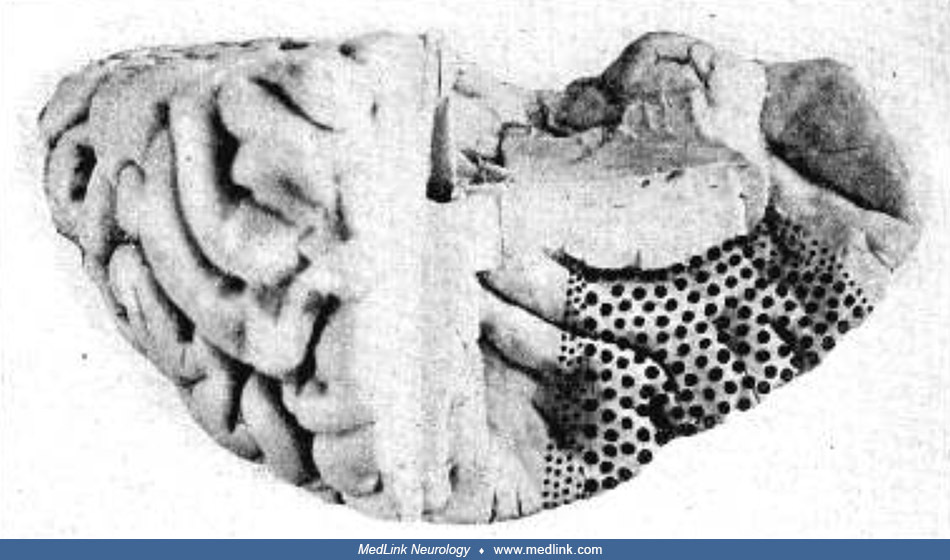
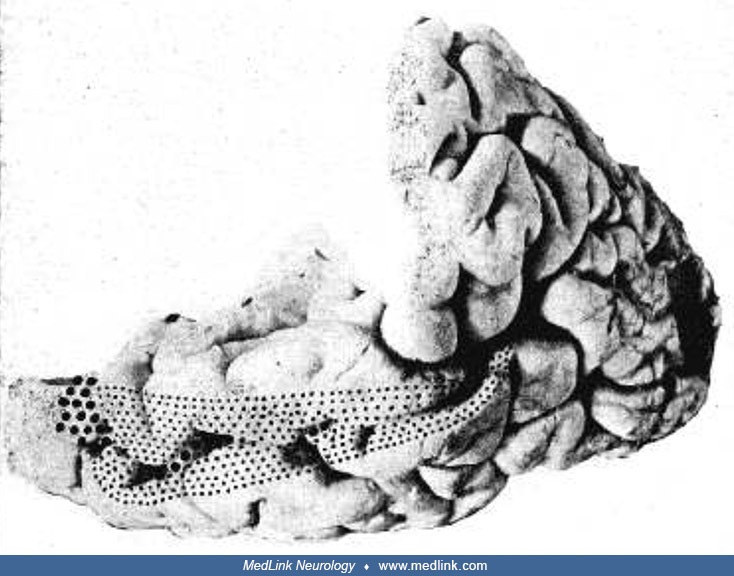
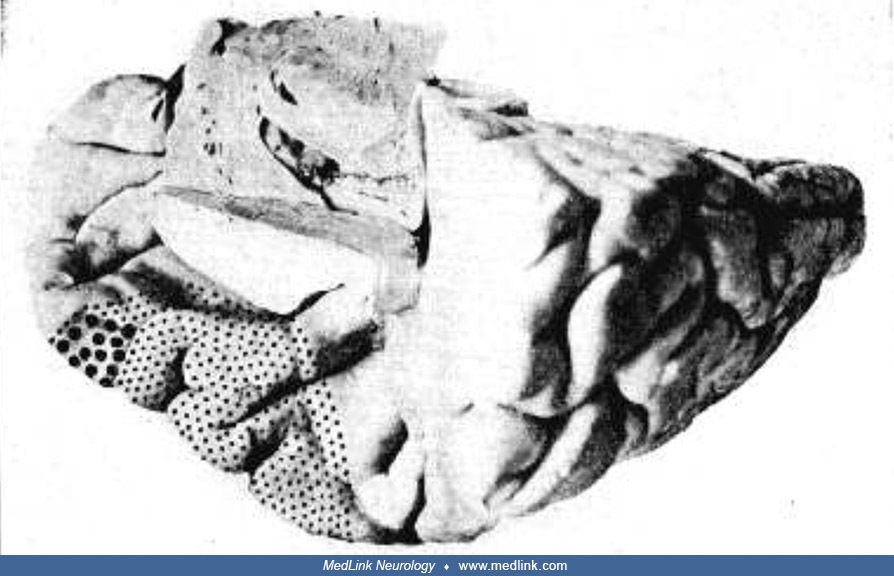
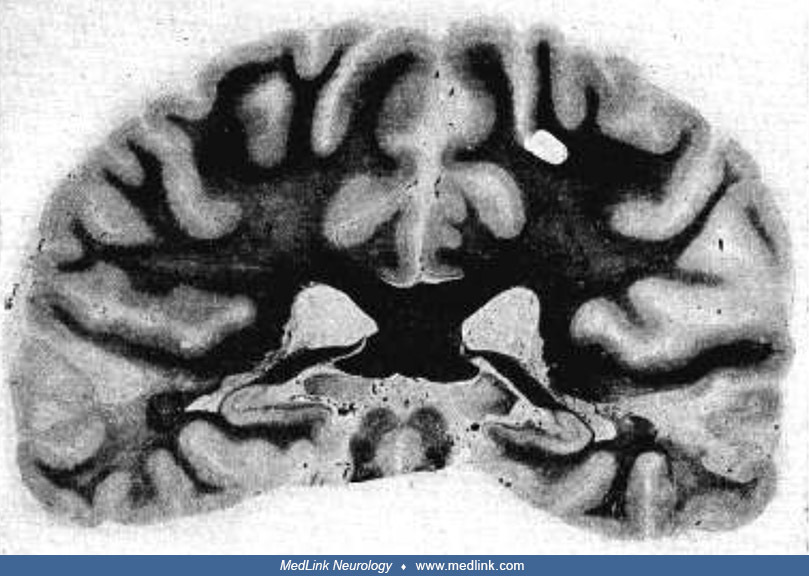
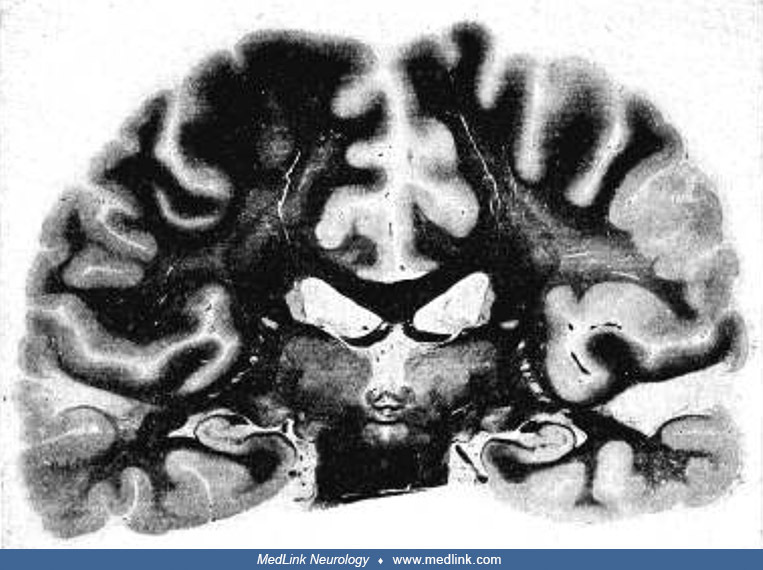
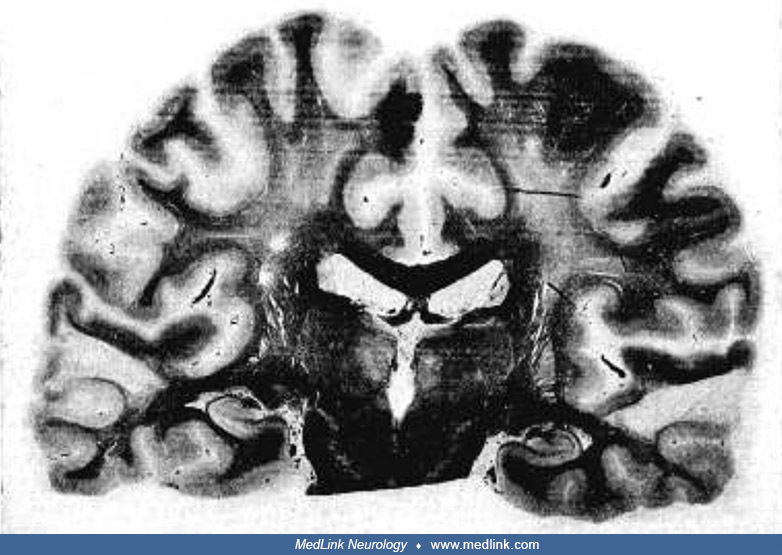
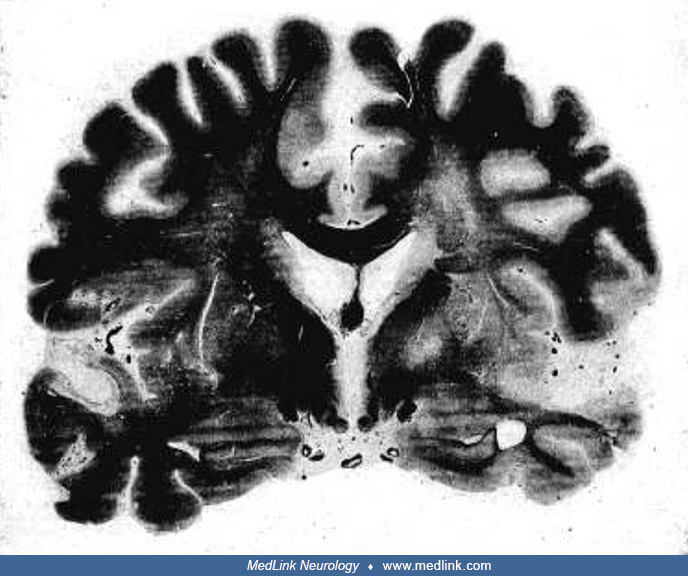
Coronal section of the brain, passing a little posterior to the beginning of involvement of the left superior temporal gyrus. (Left side) On the left side, the entire lower lip of the superior temporal gyrus is destroyed, including the cortex and the larger part of the center of the convolution. The outer one third of the dorsal surface is gone. All that is preserved is the inner two thirds of the cortex with a narrow strip of underlying fibers. The destruction further involves the cortex at the bottom of the superior temporal fissure and the greater part of the cortex of the dorsal surface of the middle temporal gyrus. In both places, the underlying fibers are variably affected. (Right side) On the right side, the lesion extends farther forward than on the left, and in this section, all the superior temporal gyrus is absent, and the adjacent angle of the insula shows a defect in the cortex and underlying fibers. (From: Barrett A. A case of pure word-deafness with autopsy. J Nerv Ment Dis 1910;37[2]:81.)